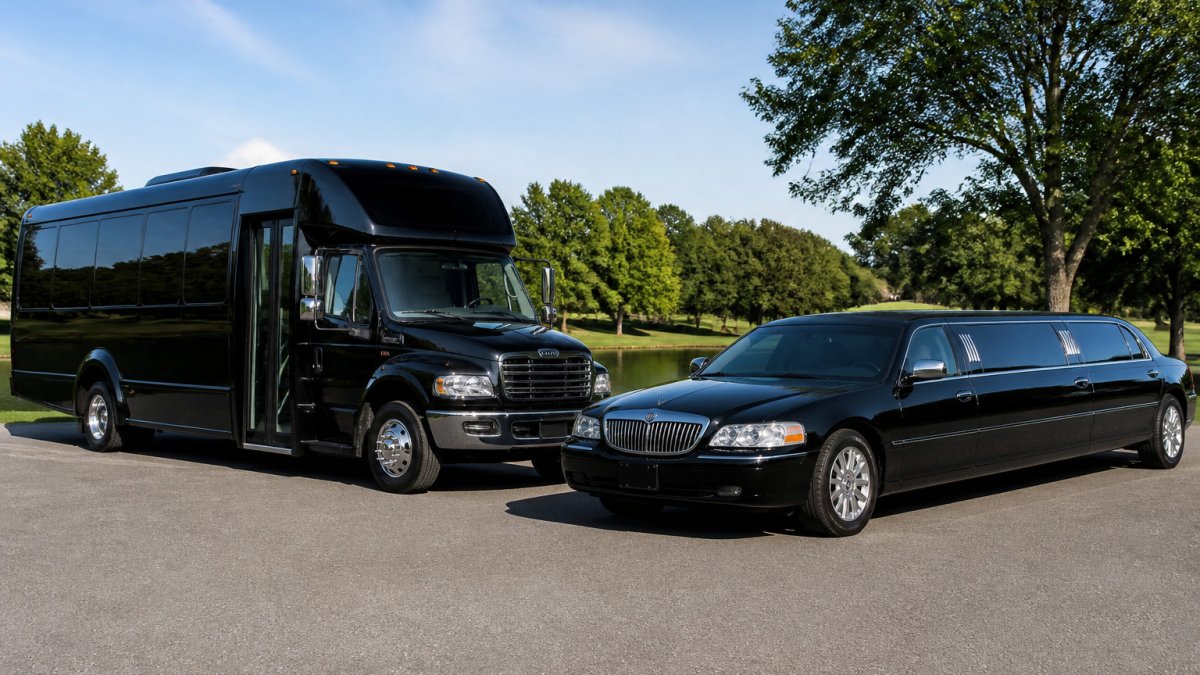
 comparison
Private Car Service vs Rideshare Apps: 2026 Comparison
Last Updated: October 23, 2026
Quick Summary
A private car service wins on airport transfers, group travel, and any trip where a missed pickup costs you a meeting, while rideshare apps win on short, spontaneous, low-stakes trips. A private car service is a scheduled, chauffeured commitment with a quoted rate held before you book, whereas a rideshare is an on-demand marketplace transaction priced by the minute and matched by an algorithm.
- Book a private car service when a failed pickup would cost you a missed flight or late client.
- Rideshare fares shift with demand, while chauffeured rates are quoted and confirmed before booking.
- Scheduled service tracks your flight in real time, so delays change pickup without a phone call.
- A party of eight needs one group vehicle or three separate rideshares with separate fares.
- Icon Transportation Wilmington carries groups of up to 54 guests across multiple vehicles.
Table of Contents
- Private Car Service vs Rideshare Apps: The Short Answer
- Private Car Service vs Rideshare Apps at a Glance
- Airport Car Service vs Rideshare: What Changes at the Curb
- Private Car Service vs Uber: Pricing Models and What You Actually Pay For
- Rideshare Airport Pickup Reliability: Where the Model Breaks Down
- Group Airport Transportation: When One Vehicle Beats Five Rideshares
- Where Each Option Wins: A Decision Framework
- Conclusion
- Frequently Asked Questions
Private Car Service vs Rideshare Apps: The Short Answer
The short answer: a private car service wins on airport transfers, group travel, and anything where a missed pickup costs you a meeting. Rideshare apps win on short, spontaneous, low-stakes trips. This comparison from Icon Transportation Wilmington breaks down where each option actually earns its keep, because the gap between them is narrower than the marketing on either side suggests.
Here is the part most guides get wrong. The real difference isn't price at the moment of booking. It's what happens when your flight lands two hours late, your group of eight needs one vehicle, or your client is standing at arrivals wondering where the car is. A private car service is a scheduled, chauffeured commitment. A rideshare is an on-demand marketplace transaction, priced by the minute and matched by an algorithm. Those are different products, and they fail in different ways.
Below, we'll show you exactly how to decide which one fits each trip, with a side-by-side table, pricing logic, and a decision framework you can apply today.
Private Car Service vs Rideshare Apps at a Glance
The clearest way to see the split is a straight comparison across the factors that decide most bookings.
| Factor | Private Car Service | Rideshare Apps |
|---|---|---|
| Booking model | Reserved in advance, assigned driver | On-demand, algorithm-matched |
| Pricing | Quoted before you book, confirmed | Varies with demand and time |
| Airport pickup | Flight tracked, driver adjusts to delays | Driver waits on your request |
| Group capacity | One vehicle for large parties | Multiple cars, split party |
| Vehicle consistency | Same class and standard each time | Depends on who accepts |
| Best for | Airport transfers, groups, events, executives | Short errands, solo trips, flexibility |
Neither column is universally better. The table shows where the models diverge, and most bad transportation decisions come from using one model for a job the other handles better.
Airport Car Service vs Rideshare: What Changes at the Curb
Airport pickups are where the two models separate fastest. An airport car service vs rideshare comparison really comes down to one question: who is responsible for finding whom?
With a chauffeured service, the arrangement is settled before you land. Our team at Icon Transportation Wilmington tracks every inbound flight in real time, so an early landing or a two-hour delay changes the pickup time without a phone call from you. The driver is already scheduled. That matters most on the routes our clients fly constantly, including ILM, RDU, and CLT.
Rideshare apps flip that responsibility. You request a car after you have bags in hand, then walk to a designated rideshare zone, sometimes a long walk from baggage claim. Fares can shift with demand at exactly the moment a planeful of passengers requests rides at once. It works fine on a quiet Tuesday afternoon. It gets unpredictable when it matters.
Private Car Service vs Uber: Pricing Models and What You Actually Pay For
A private car service vs Uber comparison usually starts with price, and that's the wrong starting point. The right question is what each pricing model is actually charging you for.
Rideshare pricing is dynamic. The app quotes a fare at the moment you request, and that fare moves with demand, traffic, and driver supply. Third-party fare comparison tools exist precisely because the number changes, and services like RideGuru's fare comparison tool let travelers estimate costs across ride-hailing and taxi options before committing. That's useful, but an estimate is not a confirmed fare.
A chauffeured service quotes a rate before you book and holds it. You are paying for a reserved vehicle, a professional driver, flight monitoring, and a dispatch team that answers when plans change. For a single short trip in normal traffic, a rideshare usually costs less. For a 5 a.m. airport run where a no-show ruins the day, the premium buys certainty.
Rideshare Airport Pickup Reliability: Where the Model Breaks Down
Rideshare airport pickup reliability is a supply problem, not a technology problem. The app works exactly as designed. The design just assumes drivers will be nearby and willing at the moment you tap request.
That assumption fails in predictable situations: peak arrival banks when several flights land together, bad weather that slows every driver, early morning departures when fewer drivers are on the road, and event weekends when demand spikes across the whole region. In those windows, wait times stretch and surge pricing kicks in. Riders sometimes see a car assigned, then reassigned.
Scheduled chauffeured service removes the matching step entirely. The vehicle is committed to you in advance, and dispatch manages the schedule. That's the structural difference: rideshare reliability depends on live marketplace conditions, while scheduled service reliability depends on a reservation made days earlier.
Group Airport Transportation: When One Vehicle Beats Five Rideshares
Group airport transportation is the clearest win for a chauffeured provider, and it's simple arithmetic. A party of eight arriving on one flight needs either one vehicle sized for the group or three separate rideshares, each with its own fare, its own driver, and its own chance of a cancellation.

Splitting a group across rideshares creates coordination costs that never show up in the fare estimate. Someone's car arrives first and they wait. Someone's driver cancels. Luggage gets distributed across vehicles and has to be reunited at the hotel. For conferences, weddings, and client visits, that fragmentation is the real expense.
Our fleet includes full-size SUVs and 14-passenger party buses, with capacity for groups of up to 54 guests across multiple vehicles. One dispatch plan, one point of contact, everyone arrives together. For a wedding block spread across several hotels, that coordination is the difference between a smooth morning and a frantic one.
Where Each Option Wins: A Decision Framework
Use this framework rather than defaulting to whichever app is already on your phone.
Choose a rideshare when:
- The trip is short, solo, and low-stakes
- You're booking spontaneously with no fixed arrival time
- Cost matters more than a confirmed fare
- You're comfortable re-requesting if a driver cancels
Choose a private car service when:
- The trip is an airport transfer with a flight to track
- Your group is larger than a standard car holds
- The arrival time is tied to a meeting, wedding, or event
- You need a confirmed rate and a driver who is already scheduled
- The trip falls in an early-morning or peak-demand window
For corporate travel managers, the framework also has an accounting angle. Rideshare receipts arrive as dozens of small transactions with variable amounts. A corporate account with a chauffeured provider consolidates billing and gives you a single point of contact for changes, which is why customized corporate account management exists as a service category in the first place.
Conclusion
The hardest part of ground transportation isn't choosing a side. It's matching the model to the trip, and most travel plans mix both without thinking about it. The next time a pickup actually matters, the difference between a scheduled car and an on-demand request will be obvious at the curb.
That's where Icon Transportation Wilmington comes in. We provide a licensed and insured chauffeured fleet with real-time flight tracking on every airport pickup, capacity for groups up to 54 guests, and service available at any hour. Get started with Icon Transportation Wilmington and put your next airport transfer, corporate account, or event logistics on a schedule you can count on.
Frequently Asked Questions
Is a private car service better than a rideshare app for airport transfers?
It depends on what you need from the trip. A private car service tracks your flight in real time, adjusts pickup when a flight is delayed or lands early, and holds a confirmed reservation with a named driver. Rideshare apps are cheaper for short, flexible trips but depend on driver availability at the moment you request. For early-morning departures, late-night arrivals, or client-facing travel, the confirmed reservation is usually worth the difference.
Is a private car service more expensive than Uber or Lyft?
Per-trip rates for a chauffeured vehicle are generally higher than a standard rideshare fare in normal demand. The gap narrows or reverses during surge pricing, when rideshare fares climb and a fixed quote does not move. For groups, the math changes again: one chauffeured SUV or van carrying several passengers can cost less per person than multiple rideshares. Ask for a quote based on your date, passenger count, and itinerary rather than comparing headline rates.
Do private car services track flights?
Reputable chauffeured operators do. Flight tracking ties the pickup time to the aircraft's actual arrival rather than the scheduled one, so a delayed flight does not leave a driver waiting on the clock or a passenger stranded at the curb. Ask any operator directly whether tracking is standard on every airport pickup or only on request, and get the answer in writing before you book.
Can you schedule a rideshare in advance for an airport pickup?
Uber and Lyft both allow advance scheduling, but a scheduled request is still matched to an available driver near the pickup time. It is not a guaranteed reservation with a specific chauffeur. If no driver accepts or demand spikes, the request can fail or reprice. That distinction matters most for tight connections, early flights, and pickups where a client or executive is waiting.
When should I book a private car service instead of a rideshare?
Book chauffeured transportation when the trip has a fixed commitment behind it: a flight to catch, a meeting start time, a wedding timeline, or a group that needs to arrive together. It also makes sense when the passenger count exceeds what a standard rideshare car holds, or when you need service at an hour when rideshare supply is thin. For spontaneous, low-stakes trips, a rideshare is usually the simpler choice.