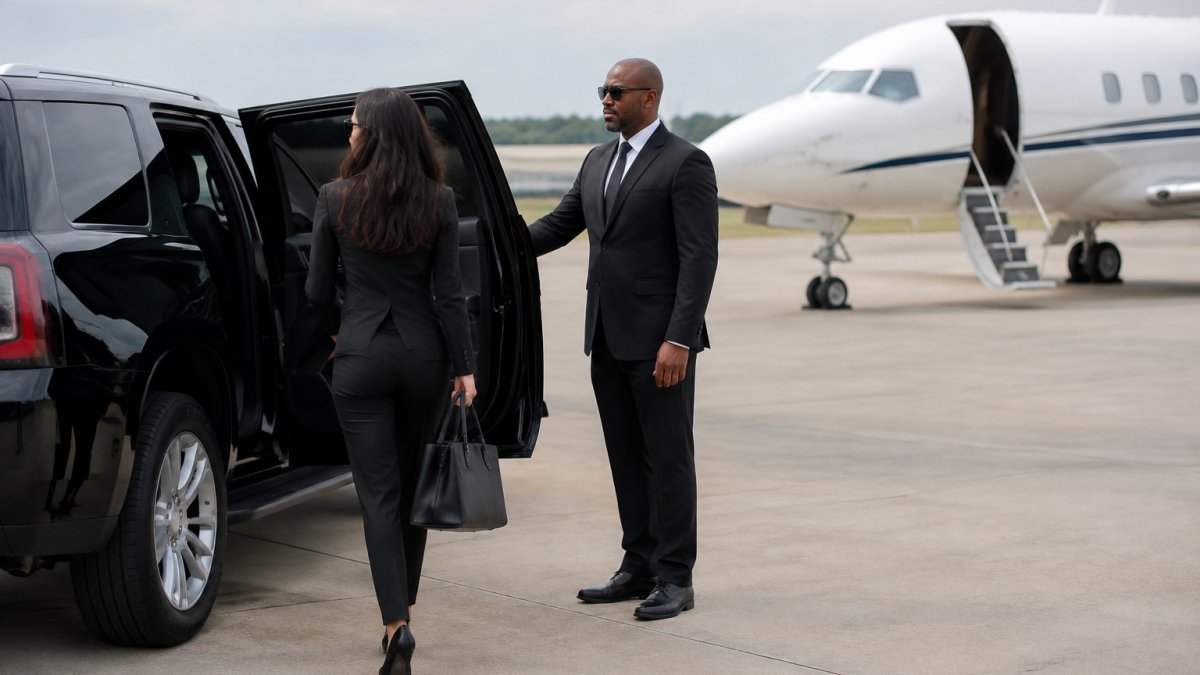
 ultimate-guide
Managing Logistics for Multi-Hotel Weddings: A Complete Guide
Last Updated: November 11, 2026
Quick Summary
Managing logistics for multi-hotel weddings works best when transportation is planned first, with every hotel treated as its own pickup point on a fixed shuttle schedule. Tier the hotels, assign guest groups on purpose, lock every booking deadline into one calendar, and name one contact per hotel before guests arrive.
- Tier hotels into a host hotel, nearby secondary properties, and overflow options before contacting any of them.
- Compare hotels on porte-cochere access, bus parking, and written cutoff dates, not just room rate.
- Build the shuttle schedule backward from the ceremony start, with departures every 20 or 30 minutes.
- Assign a transportation lead, a shuttle captain per vehicle, and one hotel contact per property.
- Run the full checklist before the wedding and confirm the quote covers the late-night return trip.
Table of Contents
- Why Multi-Hotel Weddings Need a Transportation Plan
- Choosing and Coordinating Multiple Hotels Step by Step
- Building a Wedding Shuttle Schedule That Works
- Mapping Wedding Shuttle Route Planning Across Hotels and Venues
- Setting Your Wedding Transportation Timeline and Budget
- Staffing Day-Of Transportation and Planning for Changes
- Using a Wedding Guest Transportation Checklist to Confirm Your Plan
- Frequently Asked Questions
Why Multi-Hotel Weddings Need a Transportation Plan
Managing logistics for multi-hotel weddings is harder than it looks, and most of the difficulty shows up in transportation. When your guests are spread across three or four hotels, a single missed shuttle can leave a dozen people stranded outside a ceremony. Couples who avoid these problems tend to treat transportation as a core part of the event, not an afterthought.
Multi-hotel weddings split a guest list into several arrival points, so every hotel becomes its own pickup location with its own timing. A written plan can keep those pickup points aligned with arrival times and check-ins, while managing wedding guest list flow helps ensure each group reaches the venue together.
Choosing and Coordinating Multiple Hotels Step by Step
Choosing which hotels to use, assigning guests to them, and keeping booking deadlines from colliding all shape whether the plan works. The five steps below cover each of these.
Step 1: Tier the hotels before you contact anyone. Sort candidate properties into three tiers. Tier 1 is the host hotel, the one closest to the venue, with the largest block and the shuttle hub. Tier 2 is a secondary property within a 10-minute drive that can share the Tier 1 shuttle loop. Tier 3 is an overflow or budget property farther out that needs its own direct run or a rideshare allowance.
Step 3: Assign guest groups to hotels on purpose. Do not let guests self-select into whichever block fills first.
Step 4: Lock every booking deadline into one calendar. Each hotel block has its own cutoff date, and they rarely align.
Watch out: a hotel that promises a 'group rate' without a written cutoff date and attrition clause can leave you paying for unbooked rooms or scrambling when the block releases early.
Building a Wedding Shuttle Schedule That Works
A wedding shuttle schedule is a fixed timetable of departures and returns that moves guests between hotels, the ceremony and the reception.
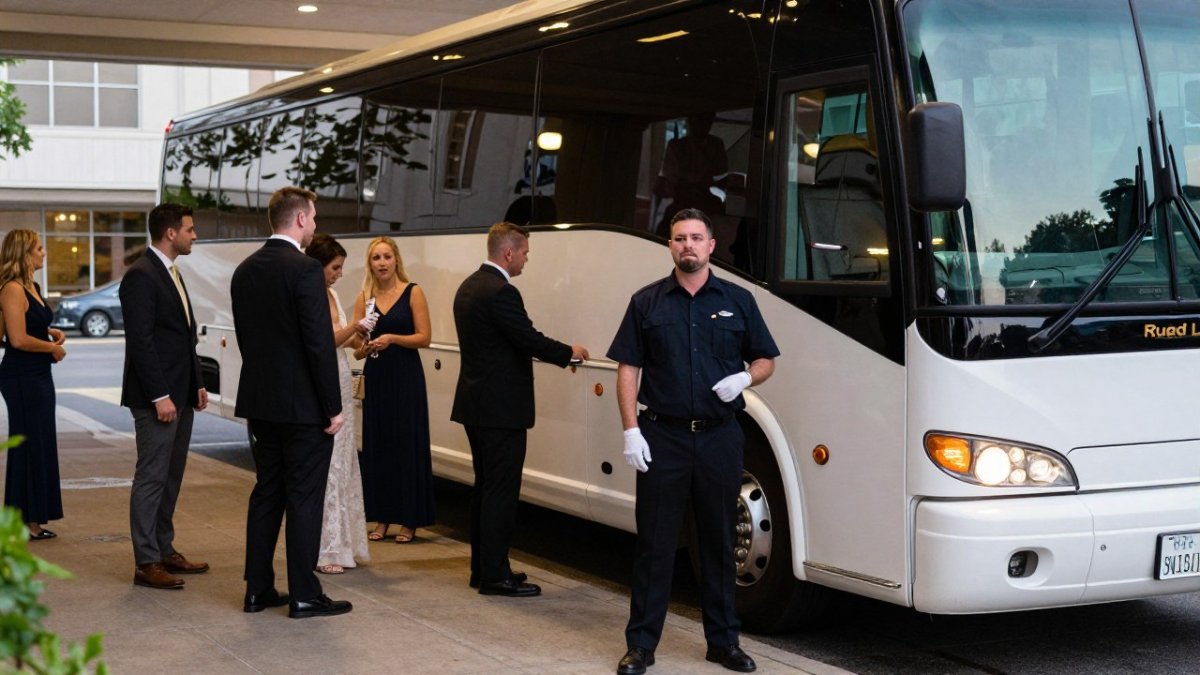
Build the schedule backward from the ceremony start time. Allow at least 20 minutes of buffer before the first departure and plan for a return shuttle after the reception ends.
!Professional chauffeur beside a 14-passenger party bus at a hotel entrance with wedding guests in formal wear boarding in early evening light
For guests traveling in from the airport, coordinate arrival times with the shuttle schedule.
Mapping Wedding Shuttle Route Planning Across Hotels and Venues
Route planning turns your hotel list and schedule into a map of actual driving paths. Start with the shortest route that visits every pickup stop, then check it against the times of day your guests will travel.
Test the route at the same time of day as the wedding. Drive it once with a loaded vehicle, time each leg, and note where a stop is difficult to reach. Pay attention to hotel entrances, drop-off zones and any road closures for events nearby.
Keep a backup route for each leg. A single accident on the main road should not strand the whole group, and your driver should know the alternate path before the day begins.
Setting Your Wedding Transportation Timeline and Budget
A transportation timeline should map each task to a deadline.
Budgeting depends on the number of vehicles, the length of service, and the number of hours each vehicle is booked. Pricing depends on vehicle type, schedule and guest count, so request a written quote for your exact date and guest count from Icon Transportation Wilmington on the website or by phone. Ask whether the quote includes gratuity, fuel surcharges and extra time for the return run.
Watch out: a quote that covers only the ceremony leg often leaves out the late-night return trip, which is where most extra charges appear.
Staffing Day-Of Transportation and Planning for Changes
A transportation plan fails on the wedding day for one of two reasons: no one owns it, or no one has decided in advance what to do when something changes. Fix both with a responsibility matrix and a written change protocol.
The responsibility matrix. Assign these roles before the wedding and put the names and mobile numbers on a single card that every vendor and hotel contact carries.
- Transportation lead (planner or trusted family member): Owns the schedule, confirms each departure with the dispatcher, and is the only person authorized to approve a schedule change. This person does not drive and does not troubleshoot guest questions, that is the shuttle captain's job.
- Shuttle captain (one per vehicle): Rides the vehicle, holds the manifest, checks guests off as they board, and radios or texts the transportation lead when the vehicle departs and arrives. The captain is the person who knows if a guest is missing before the bus leaves.
- Hotel contact (one per property): Stands by the pickup area 15 minutes before each departure, confirms the vehicle has arrived, and tells the captain which booked guests have not yet come down.
- Dispatcher (transportation company): Tracks flights, adjusts pickup times, and reroutes vehicles. The transportation lead calls the dispatcher, not individual drivers, for any change.
- Family helper (one per hotel): Handles the non-transport questions, where is the ceremony, what time is the dress code, where is the after-party, so the transportation lead is not fielding those calls during a departure window.
The change protocol. Agree in writing on these triggers before the wedding day:
- Flight delayed more than 30 minutes: The dispatcher shifts that airport pickup to the next scheduled run and notifies the transportation lead, who tells the hotel contact and the guest.
- Shuttle more than 10 minutes late: The captain texts the transportation lead, who calls the dispatcher for an ETA and tells the next hotel's contact to hold guests in the lobby rather than the pickup area.
- Hotel block full or overbooked: The transportation lead moves overflow guests to the Tier 2 property and adds a direct run to that hotel's schedule; the hotel contact confirms the new pickup point.
- Weather or road closure: The dispatcher reroutes to the documented backup path, and the transportation lead sends one group message to all guests with the new departure time.
One channel for updates. Pick a single group text thread or messaging app channel for the wedding party and hotel contacts, and use it only for transportation updates.
Accessibility staffing.
Watch out: if two people both think they own the schedule, a late shuttle gets two different fixes and the guests get none.
Assigning clear roles and agreeing on change triggers in advance keeps the day-of transportation plan on track.
| Role | Responsibility | Key action |
|---|---|---|
| Transportation lead | Owns the schedule and approves changes | Only person who approves schedule changes |
| Shuttle captain | Rides the vehicle and holds the manifest | Checks guests off and reports departures |
| Hotel contact | Stands by pickup area | Arrives 15 minutes before each departure |
| Dispatcher | Tracks flights and reroutes vehicles | Adjusts pickup times for delays |
| Family helper | Handles non-transport guest questions | Keeps the lead free during departures |
Using a Wedding Guest Transportation Checklist to Confirm Your Plan
Before the wedding, run through a checklist to confirm the plan is complete:
- Every hotel has a confirmed group block and a named contact
- The shuttle schedule is shared with all guests and hotels
- Each vehicle's capacity has been confirmed for the actual passenger count
- Airport arrival times are logged and linked to pickup schedules
- The route has been driven at the time of day the wedding will run
- Backup routes are documented for each leg
- The day-of coordinator knows who to call for each vehicle
- Accessibility needs have been requested and confirmed
- The written quote covers the full schedule, including return trips
- Guests have a single document with addresses, stops and departure times
A complete checklist turns a stack of separate tasks into one working plan, and it gives you a clear record to share with your vendors and your wedding party.
Frequently Asked Questions
How do you coordinate transportation for a wedding with guests at multiple hotels?
Start by mapping every hotel that holds guest room blocks against the ceremony and reception venues. Group hotels that sit near each other, then assign each group a shuttle loop or pickup point. Share a single schedule with guests and drivers so everyone knows which vehicle serves which hotel and at what time. Confirm the plan with your transportation provider at least several weeks before the wedding, and again the week before, to catch any changes in guest counts or hotel blocks.
How far in advance should wedding transportation be booked?
Book wedding transportation as soon as your venues and hotel room blocks are confirmed, ideally several months ahead for peak wedding weekends. Early booking secures the vehicle sizes you need, such as 14-passenger party buses for groups, and gives you time to build a wedding shuttle schedule around fixed arrival times. Plan to finalize pickup times and passenger counts about two to three weeks before the event.
How do you estimate how many wedding guests need shuttle transportation?
Start with your guest list and ask each guest whether they plan to ride shuttles, drive themselves, or take a rideshare. Count guests staying at each hotel separately, since a single shuttle loop serves one hotel group better than mixed stops. Add a buffer for late RSVPs and for guests who may ride one way only. Fleet capacity matters here: Icon Transportation Wilmington's combined fleet can carry up to 54 guests, so you can size vehicles to your exact headcount.
What information should a wedding transportation schedule include?
A useful wedding transportation schedule lists each pickup location, the exact pickup time, the destination, the expected arrival time, and the vehicle assigned. Include the venue address, the event start time, and any dress expectations or parking instructions that affect arrival. Add a contact number for the coordinator on duty. Share the schedule through a single guest information hub so updates reach everyone at the same time.
How do you keep guests informed about shuttle pickup times and locations?
Publish one guest information hub, such as a wedding website page or a shared document, and link to it from every save-the-date and invitation. Post the shuttle schedule there with clear pickup spots at each hotel. Send short text or email updates when times change, and name a single communication channel for questions so guests do not get conflicting answers. Confirm pickup spots with hotel front desks in advance.
Should wedding shuttles stop at more than one hotel?
Yes, when guests are spread across several hotels that sit close together. A shuttle loop with fixed stops can serve two or three hotels and keep transfer times predictable. Limit the number of stops per run, though, because each added stop lengthens the route and makes timing harder to hold. For hotels far apart, run a separate shuttle for each group instead of one long loop.
How much time should you allow for wedding guest transfers between hotels and venues?
Allow extra time beyond the drive itself. Build in boarding time, traffic buffer, and a few minutes for guests to gather at each stop. For a short cross-town transfer, plan a window that covers loading, the drive, and unloading, then add a cushion for weekend traffic and bridge or drawbridge delays common on the North Carolina coast. Confirm the buffer with your transportation provider based on the actual route.
What is the best way to manage transportation for a multi-day wedding?
Treat each day as its own transportation plan with its own schedule, route, and vehicle assignments. Use the same guest information hub across all days so guests find everything in one place. Build a wedding transportation timeline that covers arrival day, welcome events, the wedding day, and departures. Assign one person to track airport arrivals and departures so late flights or early checkouts do not leave guests stranded.